

Electronic Plastic-case Circuit Breaker
Why Choose Us
Business philosophy
The company always adheres to the business philosophy of "survive by quality, develop by technology, and achieve efficiency by management", and meets the current and future needs of customers with high-quality electrical products and services.
Rich industry experience
The company has been continuously upgraded through diversified sales products and services over the years, and has been praised by the majority of users! And enjoy a good reputation and credibility among consumers, and with a number of supporting manufacturers and agents to establish long-term stable cooperative relations.
24-Hour Service
Our dedicated 24-hour online support ensures prompt responses, providing you with an excellent shopping experience. Feel free to reach out with any questions at any time.
Fast delivery time
We have optimized production processes and supply chain management to achieve fast delivery times. With our advanced production scheduling system, we are able to accurately predict production cycles and respond quickly to order needs.
What is Electronic Plastic-Case Circuit Breaker
An Electronic Plastic-Case Circuit Breaker (EPCCB) is a specialized type of circuit breaker designed to protect electrical circuits from damage due to overcurrent or short circuits. This protection is crucial in preventing fires and other hazards that can occur from electrical faults.
-
![Electronic Circuit Breaker]() Electronic Circuit BreakerThis type of circuit breaker uses an electronic trip unit (ETU) to detect current and provides protection against overload, short circuits, and other faults through a circuit composed of...read more
Electronic Circuit BreakerThis type of circuit breaker uses an electronic trip unit (ETU) to detect current and provides protection against overload, short circuits, and other faults through a circuit composed of...read more -
![Smart Electric Breaker]() Smart Electric BreakerThe working principle of a smart circuit breaker is primarily based on current detection and automatic protection mechanisms.read more
Smart Electric BreakerThe working principle of a smart circuit breaker is primarily based on current detection and automatic protection mechanisms.read more -
![Electronic Breaker]() Electronic BreakerWhen the current passing through the electronic circuit breaker exceeds its rated value, it causes an overload. Prolonged overload increases the temperature inside the circuit breaker, potentially...read more
Electronic BreakerWhen the current passing through the electronic circuit breaker exceeds its rated value, it causes an overload. Prolonged overload increases the temperature inside the circuit breaker, potentially...read more -
![Thermal Circuit Breaker]() Thermal Circuit BreakerThe working principle of a thermal circuit breaker is based on thermal effects and the thermal deformation characteristics. When the current in the circuit exceeds the rated value, the thermal...read more
Thermal Circuit BreakerThe working principle of a thermal circuit breaker is based on thermal effects and the thermal deformation characteristics. When the current in the circuit exceeds the rated value, the thermal...read more -
![Solid State Circuit Breaker]() Solid State Circuit BreakerA solid-state circuit breaker (SSCB) is a switching device based on power electronic devices (such as IGBTs, GTOs, etc.) used to quickly and arc-freely cut off a circuit.read more
Solid State Circuit BreakerA solid-state circuit breaker (SSCB) is a switching device based on power electronic devices (such as IGBTs, GTOs, etc.) used to quickly and arc-freely cut off a circuit.read more


Where Are Plastic-Case Circuit Breaker Used
Industrial Facilities
Factories and manufacturing plants rely on Plastic-Case Circuit Breaker to protect circuits powering machinery, motors, and other high-power equipment.
Commercial Buildings
Office buildings, shopping centers, and other commercial spaces utilize Plastic-Case Circuit Breaker to safeguard circuits feeding lighting systems, elevators, and HVAC equipment.
Data Centers
These critical facilities require robust electrical protection. Plastic-Case Circuit Breaker ensure uninterrupted power delivery to sensitive IT equipment.
Power Distribution Panels
Plastic-Case Circuit Breaker are often integrated into distribution panels, serving as the first line of defense for multiple circuits branching out to various electrical loads.
Construction Of Plastic-Case Circuit Breaker
Arc Chute
Arc chute is a set of parallel metal plates that are mutually insulated from each other. it helps in extinguishing the arc by splitting the arc and lengthening it. it is also known as an arc divider or arc splitter. These plates are made of ferromagnetic material.
Contacts
Contacts are the metallic conductors that are responsible for carrying the current to the load. There are two types of contacts i.e. fixed and moving contact. The contacts are made of arc resistance material having low resistivity and corrosion. The quality of the material decides the lifetime of the circuit breaker.
Operating Mechanism
It is the mechanism of Plastic-Case Circuit Breaker responsible for opening and closing the current-carrying contacts. it is connected with trip unit that triggers the operating mechanism. The trip unit operates on a thermal and magnetic mechanism.
Terminal Connector
The terminal connectors are used to connect the Plastic-Case Circuit Breaker to the external circuit. The to a upper terminals are connected to the output/load while the bottom terminals are connected to the input/supply. Although they are bidirectional, the input and output designation is due to their physical installation
Trip Unit
It is the unit responsible to trigger the operating mechanism. The trip unit includes a thermal mechanism for overload, magnetic tripping for short circuits and a test button for testing.
Thermal Trip Unit
The thermal trip unit uses a thermal mechanism that is a bimetallic strip that bends (and opens the contacts) when the temperature rises due to the overloading.
Magnetic Trip Unit
The magnetic trip unit has a relay that generates a magnetic field when higher currents flow through its solenoid due to the short circuit. it trips the circuit breaker. While the test button is used to simulate the above-said mechanisms and test the response of the circuit breaker.
Handle / Trip-free Mechanism
It is a handle used to open or close the breaker manually. It is also known as a trip- free mechanism because it will trip even if the handle is held in ON position.
The handle could be in either three positions i.e. upward, middle or downward. If the abo handle is in upward position, it is ON position. If it is in the middle position, the breaker has been tripped while the downward position shows OFF status.
Trip Button
The trip button is used for testing the breaker. It is a red-colored button that trips the operating mechanism when pushed.
Working Principle Of Plastic-Case Circuit Breaker
1. Working Conditions Of Molded Case Circuit Breakers
●The upper limit of ambient air temperature is + 40 C; the lower limit of ambient air temperature is - 5 C; and the average value of ambient air temperature for 24 hours is not more than + 35 C.
●Elevation: The installation site is not more than 2000m above sea level.
●Atmospheric conditions: Atmospheric relative humidity does not exceed 50% at ambient air temperature of + 40 C; higher relative humidity can be obtained at lower temperatures; the maximum monthly average relative humidity of the wettest month is 90%, and the minimum monthly average temperature of that month is + 25 C, taking into account the condensation occurring on the surface of products due to temperature changes.
●Pollution grade: Pollution grade is
2. Working Principle of Molded Case Circuit Breaker
●The main contacts of low-voltage circuit breakers are operated manually or electrically. After the main contact is closed, the free release mechanism locks the main contact at the closing position. The coil of the overcurrent release and the thermal element of the thermal release are in series with the main circuit, and the coil and the power supply of the undervoltage release are in parallel.
●When the circuit is short-circuited or seriously overloaded, the armature of the over-current tripper is sucked, which makes the free tripping mechanism act and the main contact disconnects the main circuit.
●When the circuit is overloaded, the heating element of the thermal release makes the bimetal sheet bend, pushes the free release mechanism to move, and the main contact disconnects the main circuit.
●When the circuit is under-voltage, the armature of the under-voltage tripper is released, which also makes the free tripping mechanism move and the main contact disconnects the main circuit.
●When the release button is pressed, the armature of the release device is sucked, so that the free release mechanism can move and the main contact can disconnect the main circuit.
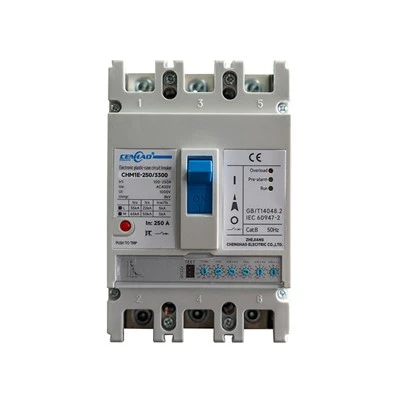
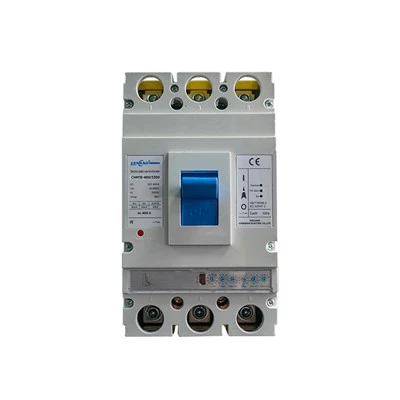
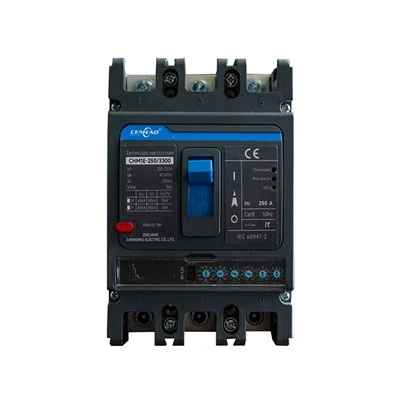
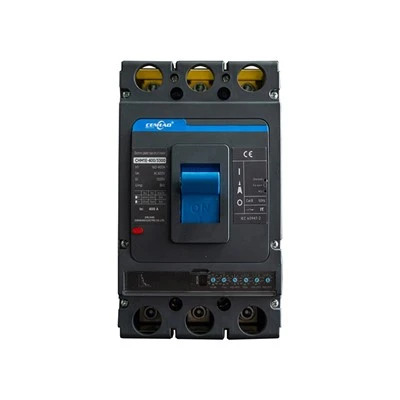
What Are The Advantages Of Electronic Plastic-Case Circuit Breaker
Better Safety
Molded case circuit breakers can better protect circuits and prevent potential harm to personal and property caused by electrical failures.
Better durability
The protective layer of the plastic case can effectively protect the internal components of the circuit breaker from physical damage and corrosion, so that the life of the circuit breaker is longer.
Lighten the load
Molded case circuit breakers can distribute current more effectively and reduce the impact of high current induced by electrical appliances on the circuit breaker, thereby reducing the load.
Higher reliability
Since the chemical stability and physical property stability of plastic materials are basically the same, molded case circuit breakers have higher reliability.
Easy maintenance
The protective layer of the plastic casing is easy to maintain, and the surface of the protective casing is not easy to cut, which prevents external elements from entering the circuit breaker and causing harm. At the same time, the maintenance of the circuit breaker itself is also very convenient and quick.
Function of Electronic Plastic-Case Circuit Breaker
Overload Protection
A molded case circuit breaker contains a bi-metallic thermal element that continuously monitors current flow through the circuit. If the current surpasses the rated capacity of the wires and equipment, the element will heat up. Upon reaching a certain temperature threshold, a mechanism within the Plastic-Case Circuit Breaker is triggered to automatically open the circuit and prevent damage from prolonged overloads. This protects equipment from overheating due to excessive loads over time.
Short Circuit Protection
Short circuits cause a sudden, dramatic surge of current that can destroy circuitry in an instant if not cleared quickly. The Plastic-Case Circuit Breaker contains an electromagnetic trip mechanism that senses fault currents and disconnects the circuit in milliseconds before serious harm can occur. This rapid response at levels above thousands of amperes minimizes equipment impact.
Overload Pre-Alarm
Some advanced models feature an early-warning overload pre-alarm function. As the thermal element begins to heat up under marginal overload conditions, the molded case circuit breaker will signal a warning before fully tripping. This allows maintenance personnel to investigate and address the cause proactively instead of a sudden shutoff.
Thermal Memory
When the Plastic-Case Circuit Breaker trips during an overload event, its thermal trip unit retains memory of peak temperature levels. Before automatic reclosure, it ensures the unit fully cools down to prevent repetitive tripping from residual heat. This provides a reliable cooldown period for equipment and circuits. The thermal memory function is only available in certain advanced models.
Precautions Of Plastic-Case Circuit Breaker
Working Conditions
The upper limit of ambient air temperature is +40℃, and the lower limit is -5℃. And the average value of 24 hours cannot exceed +35℃.
The altitude of the installation site shall not exceed 2000m.
The pollution level is level 3.
Matters Needing Attention
On circuit equipment, there are usually signs of power and load. In the actual wiring process, you need to follow the signs above and do not reverse the two.
The control switch or protection line must not pass through the current transformer. When the three-phase five-wire system or the single-phase three-wire system is adopted, the protection line must be connected to the protection trunk line at the inlet end of the leakage circuit breaker. In the case of single-phase lighting circuits, three-phase four-wire distribution lines, and other lines or equipment that use a working neutral line, the neutral line must pass through a current transformer.
In the system where the neutral point of the transformer is directly grounded, once the leakage circuit breaker is installed, the working neutral line can only be used as the working neutral line after passing through the current transformer. It cannot be grounded repeatedly, nor can it work with other lines. The neutral line is connected. The electrical equipment can only be connected to the load side of the leakage circuit breaker, and one end is not allowed to be connected to the load side and the other end to the power supply side.
Ensure Safety And Reliability Of Plastic-Case Circuit Breaker Electrical Installations
Application of plastic case circuit breakers in the power industry: In power systems, plastic case circuit breakers play a vital role and can effectively protect power equipment and lines from overloads and short circuits. Especially in power grid operation, the rapid response and reliability of molded case circuit breakers are crucial to ensuring the stable operation of the power system. In addition, it can be explored how molded case circuit breakers cope with changing power loads and short-circuit conditions in the renewable energy sector to ensure reliable power supply.
Application of molded case circuit breakers in industrial production: In mining, petrochemical, metallurgical and other industries, electrical equipment often faces harsh working environments and high-intensity workloads. The high short-circuit breaking capacity and arc extinguishing system of molded case circuit breakers can effectively meet these challenges and ensure the safe operation of electrical equipment. At the same time, we can explore how molded case circuit breakers can be combined with advanced control systems to achieve intelligent protection and monitoring of electrical equipment in the fields of industrial automation and intelligent manufacturing.
Application of molded case circuit breakers in construction and transportation: In building electrical systems, molded case circuit breakers can provide reliable protection for building equipment and lighting systems, ensuring the safe operation of internal circuits in buildings. In the field of transportation, the shock resistance and high reliability of molded case circuit breakers are crucial to ensuring the safety of electrical systems in railways, ships and other transportation vehicles.
Future development trends and innovation directions of molded case circuit breakers: With the development of Industry 4.0 and smart grids, molded case circuit breakers may further innovate towards intelligence, remote monitoring and predictive maintenance to meet the needs of Changing electrical system needs.
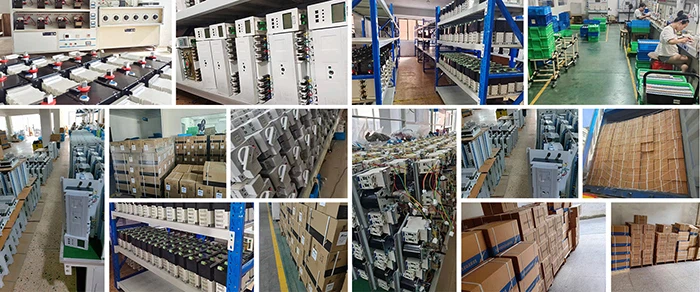
Yueqing City, Zhejiang Province, Fangdouyan Industrial Zone. The company focuses on the field of high and low voltage electrical equipment industry, specializing in the production of universal circuit breaker series, plastic circuit breaker series, small circuit breaker series, AC contactor series, surge protector series, load isolation switch series, isolation knife switch series, control and protection switch series, double power automatic transfer switch series, high voltage components series and other products.
FAQ
As one of the most professional electronic plastic-case circuit breaker manufacturers and suppliers in China, we're featured by quality products and good price. Please rest assured to buy customized electronic plastic-case circuit breaker made in China here from our factory.
Thermal Circuit Breaker, Solid State Circuit Breaker, Electronic Circuit Breaker